
"Normal"
Prepared by Vyshnavi Charrlotte
11 August 2026
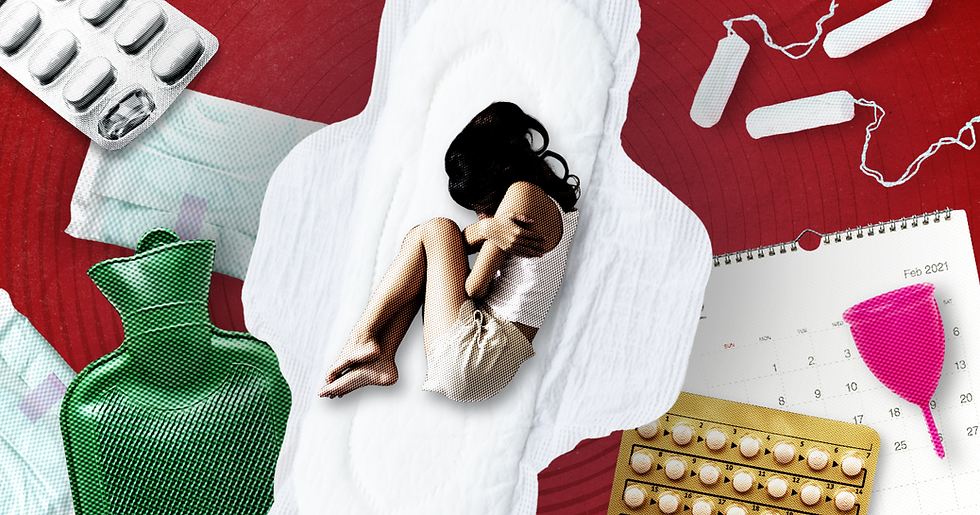
At 14, she went through seven or eight pads a day for up to twelve days every time her period came. At 22, the cramps became so severe that she could no longer sit through lectures. She was prescribed birth control pills to manage the pain. Within months, her body felt unfamiliar. The weight came quickly. Hair appeared in places it never had before. Angry cystic acne spread across her face. She panicked. The doctor told her just to lose some weight, and everything will be fine.
At 25, the pain began arriving before her period did. First came the lower back pain. Then the migraines. Then the cramps. Some months, she spent three out of four weeks in pain. She gets on with her day, popping painkillers like they were candy. At 26, there was never a day she wasn’t in pain. Mustering all her courage, she made it to the clinic for an ultrasound to get some answers. As she was waiting, nails in her skin, she wondered how relieving it would be to be told how to fix her pain, finally. The scans were normal, and she was told everything was fine. Defeated, she grabbed more painkillers to get through. Nobody seemed alarmed. It was, after all, normal.
Normal is pain.
Girls learn from their mothers, who learned from their mothers, that pain is part of womanhood. The hot water bottle is passed down. The painkillers are passed down. The advice to “just push through” is passed down. So is the belief that suffering is something to be endured rather than investigated.
Normal is adapting.
Carrying a portable pharmacy everywhere to help manage symptoms. Taking frequent breaks while doing house chores, because it’s tough on the lower back. Women become experts at planning their lives around pain. Holidays are scheduled around menstrual cycles. Meetings are endured through migraines. Painkillers sit in handbags, glove compartments, desk drawers and bedside tables. Entire lives are reorganised around symptoms that nobody has named.
Normal is being doubted.
“Are you sure your pain is that bad?” “Have you tried losing weight?” “Maybe you just have low pain tolerance” “Maybe you’re just stressed, try to manage your stress” “Maybe you’re exaggerating” “Have you tried taking birth control pills?” “This is normal, you’re overreacting”. Being constantly doubted about their pain and symptoms has become the new normal for women. Women have gotten so tired that instead of convincing doctors, they started convincing themselves it’s all in their heads.
Normal is waiting.
For many Malaysian women, the journey does not begin with a diagnosis. It begins with a decision. A decision to stop dismissing the pain. A decision to stop convincing themselves that everyone feels this way. A decision to finally walk into a clinic and ask: “Is this normal?” That is when the waiting begins. A visit to the GP. A prescription for painkillers. An ultrasound. A referral. A consultation months later. Another scan. Another appointment. Another explanation. Another dead end.
Women can spend years moving between clinics, hospitals and specialists searching for answers. Some are told their scans are normal. Others are told it is stress, hormones, or simply part of being a woman. Meanwhile, life does not pause. The pain follows them into classrooms. The fatigue follows them into work. The uncertainty follows them home. Every month, the symptoms return. Every month, they wait for the next appointment, the next referral, the next doctor. Waiting becomes its own condition. Waiting to be believed. Waiting to be taken seriously. Waiting for someone to tell them that what they are experiencing is not normal. Because after years of unanswered questions, the hardest thing to live with is not always the pain. It is the feeling of uncertainty.
By the time many women receive a diagnosis, they have already spent years adapting to symptoms that should have raised questions much earlier. They memorise which days of the month are most likely to be lost to cramps, back pain, fatigue or heavy bleeding. They become experts at appearing functional while their bodies demand otherwise. The devastating thing is not how rare these experiences are. It is how common they have become. When suffering is widespread, it can begin to look ordinary. Pain becomes part of growing up. Missing school becomes part of adolescence. Struggling through the workday becomes a part of adulthood. Delayed diagnosis becomes an unfortunate but accepted reality.
Normal, however, is not the same as acceptable.
If a teenager regularly vomits from migraines, it wouldn’t be dismissed. If an adult repeatedly missed work because of chest pains, doctors would likely take them seriously. Yet symptoms relating to menstruation and reproductive health are often seen through a different lens, one that expects women to endure suffering before being taken seriously. This is not simply just a medical issue; it is also a cultural issue.
Malaysia has made important strides in healthcare access, but stories of delayed diagnosis reveal gaps that awareness campaigns alone cannot close. Access to specialists, consistency in recognising symptoms, public understanding of women’s health conditions, and the tendency to normalise menstrual pain all shape whether a woman receives answers quickly or spends years searching for them. When a system repeatedly produces long waits, missed signs, and delayed diagnoses, the problem is larger than individual cases. It becomes a question of what society has chosen to regard as normal.
At 14, I thought the bleeding was normal. At 22, I thought the weight gain, acne and hair growth were normal. At 25, I thought the migraines, cramps and back pain were normal. At 26, I sat in a clinic waiting room, hoping someone would finally explain why I was hurting. Instead, I was told everything looked normal. As I reflected on my experience, I no longer questioned whether the pain was real. The more troubling question is why this amount of suffering, which disrupted daily life, had been regarded as normal for so long.
Pain may be common. Waiting may be common. Even being dismissed may be common. But common should never be mistaken for normal. References 1. Mok, K. T., Kaur, S., Say, Y. H., et al. (2024). Knowledge and attitudes on anemia and menstrual health among Malaysian female university students. Scientific Reports, 14, Article 26020. https://doi.org/10.1038/s41598-024-76655-9 2. Ibid. 3. Mohamad Bakro, R., Farrukh, M. J., Rajagopal, M. S., Kristina, S. A., Ramatillah, D. L., Ming, L. C., Paneerselvam, G. S., & Hadi, M. A. (2023). Assessment of prevalence, knowledge and health-related practices of dysmenorrhea among Malaysian women in Kuala Lumpur: A cross-sectional survey. Annals of Medicine, 55(2), Article 2281655. https://doi.org/10.1080/07853890.2023.2281655 4. Lim, W. P. P., Tham, J.-S., Osman, M. N., & Omar, S. Z. (2026). Breaking the silence: Unveiling the cultural barriers to endometriosis disclosure in Malaysia. Jurnal Komunikasi: Malaysian Journal of Communication, 42(1), 20–40. https://doi.org/10.17576/JKMJC-2026-4201-02 5. Ibid.


Comments